As Rains Soak California, Farmers Test How To Store Water Underground
January 18, 2017
Flood Valley fields: Farmer incentives would pump up aquifer recharge
April 10, 2017
California farmers use floodwater to replenish aquifers
Using a network of levees and irrigation gates, a farmer used gravity to drive water back into an ailing aquifer
Wednesday, Feb 22, 2017 08:00 AM
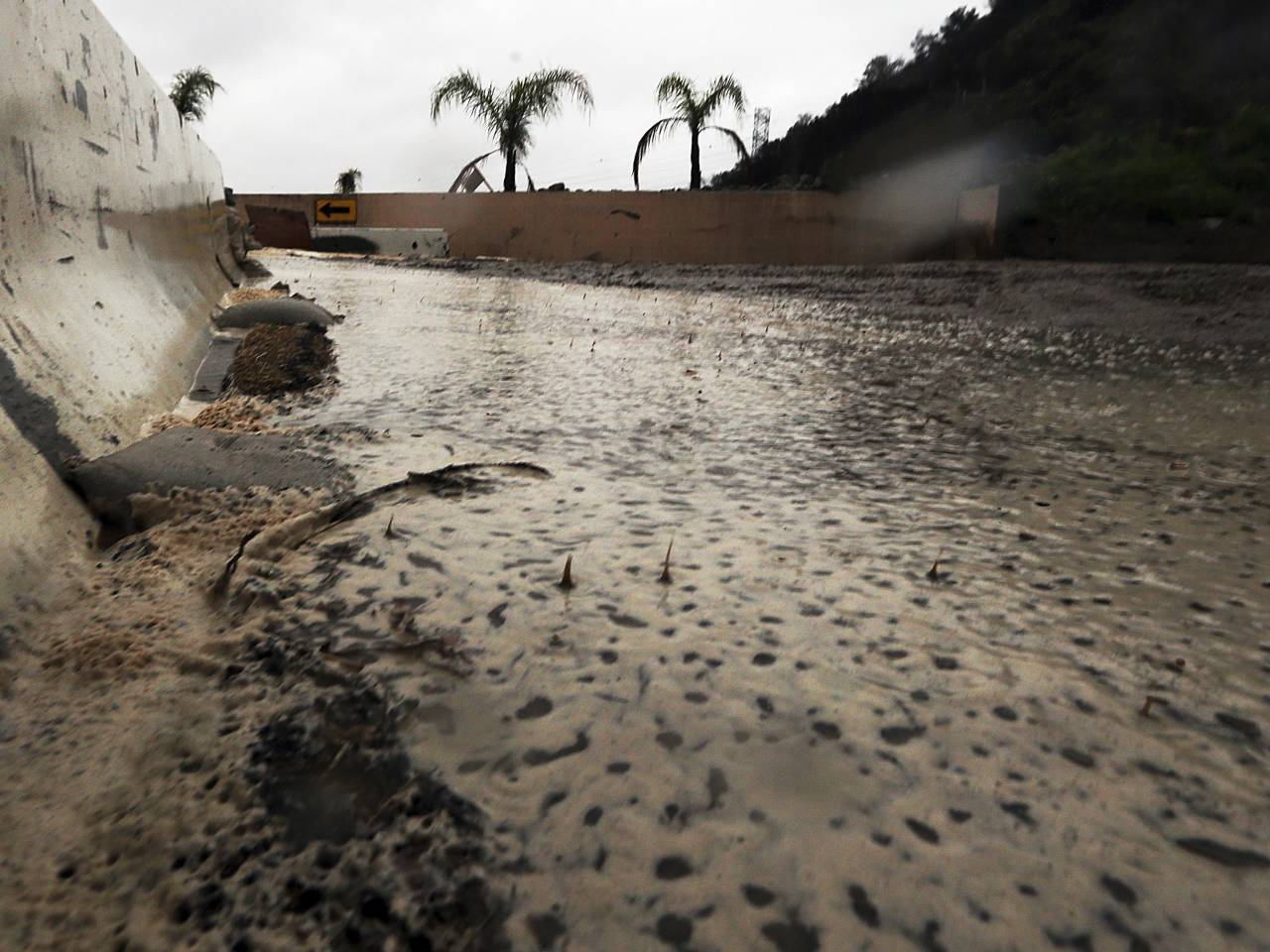
Raindrops splash in water, mud and debris in a basin slowly filling up in Duarte, Calif., in a threatened area below a burn area know as the Fish Fire, as a powerful storm moves into Southern California Friday, Feb. 17, 2017. The saturated state faces a new round of wet weather that could trigger flooding and debris flows. (AP Photo/Reed Saxon)(Credit: AP Photo/Reed Saxon)
This article originally appeared on Climate Central.
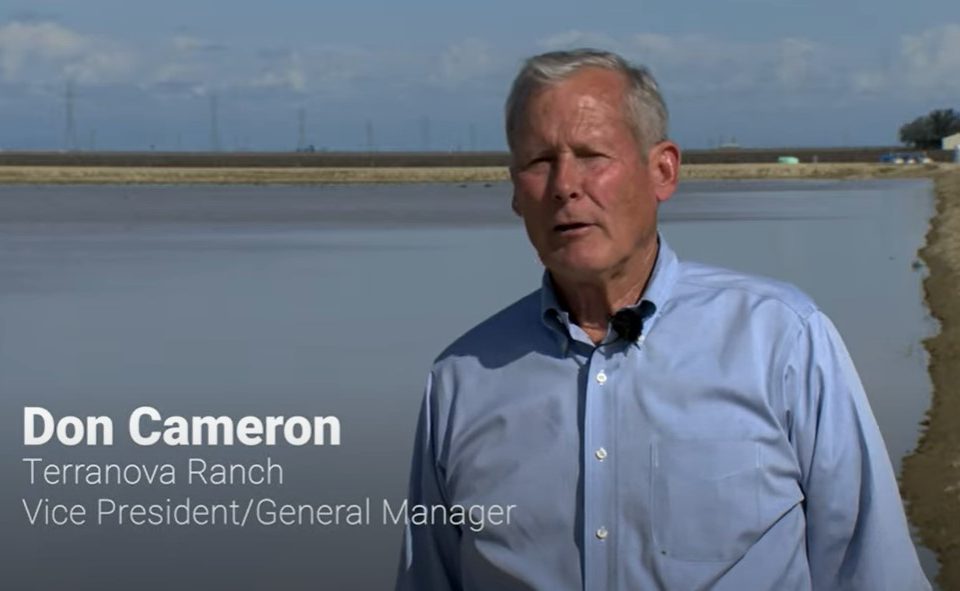
As dam managers were draining water from a Northern Californian reservoir this week to avert what could have been one of the worst flood disasters in the state’s history, Southern California farmer Don Cameron was doing something different with the watery winter excess.
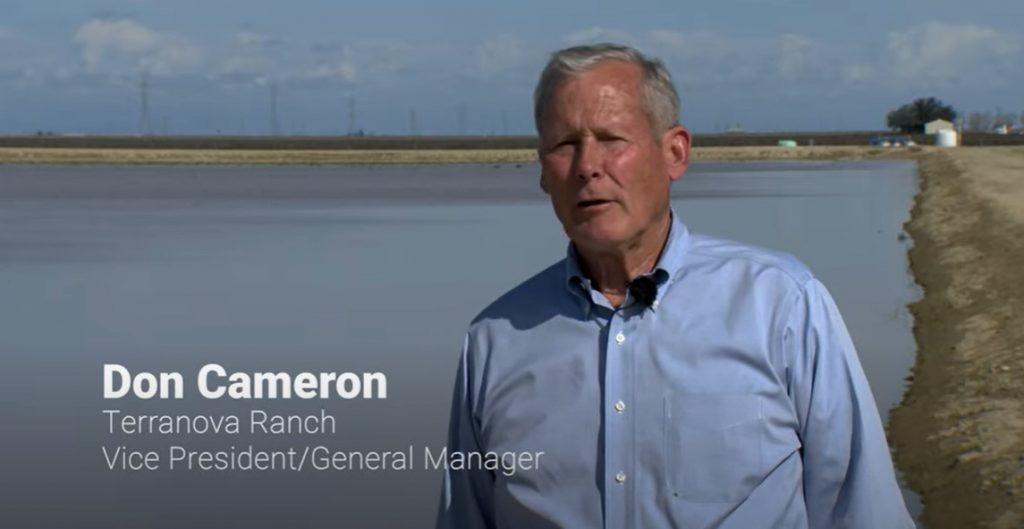
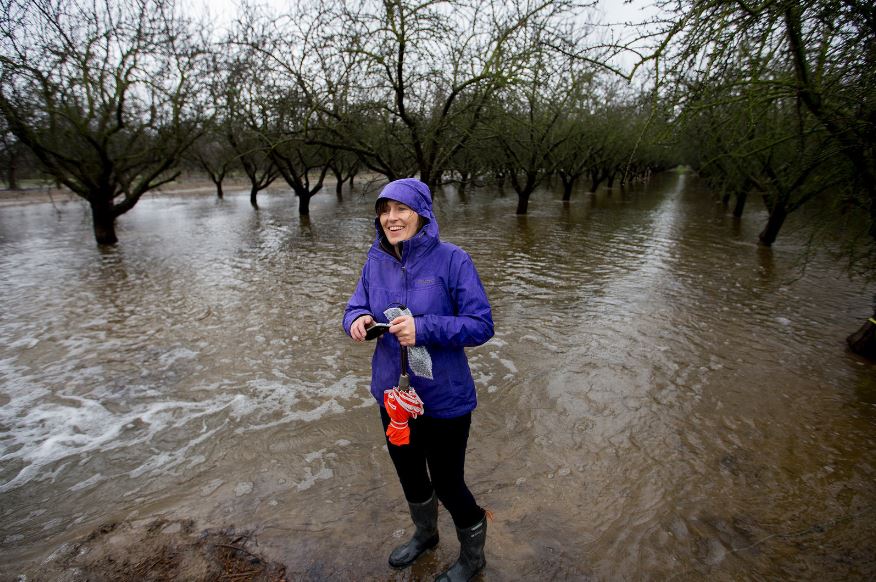
Using a network of levees and irrigation gates, Cameron inundated the orchards, vineyards and vegetable and alfalfa fields of Terranova Ranch, a farm in Fresno County that he manages, using the power of gravity to drive water back into an ailing underground aquifer.
Similar approaches are being considered and tested statewide as California confronts the impacts of aging infrastructure, rising temperatures and decades of unsustainable use of water from wells. Groundwater recharging can reduce flood risks, boost water storage and alleviate the sinking of lands that often follows heavy groundwater pumping.
“Our primary source of water is groundwater,” Cameron said. “We have a reservoir under our farm that needs to be replenished, and it’s a lot more easy to do that than try to build above-ground structures.”
Nearly 200,000 Californians were evacuated this week after heavy winter rains following years of drought nearly overtopped the Oroville Dam, which is the tallest in the state. Two emergency spillways used to flush excess water from the reservoir were damaged.
“The Oroville crisis certainly does seem like a call to work with nature, rather than against her, by expanding groundwater storage as opposed to big new dams,” said Kate Poole, a leader of the nonprofit Natural Resources Defense Council’s water program. “There are many fewer environmental problems associated with groundwater storage.”
Rising temperatures are projected to cause California’s powerful winter storms to dump more rain and less snow, and to hasten the melting of snowpacks, requiring more water to be captured in winter and spring for use in the warmer months.
Efforts to build or expand above-ground water reservoirs are hampered by their heavy environmental impacts. Reservoirs inundate valley ecosystems, release heat-trapping methane and threaten downstream communities with flood disasters if the dam wall fails.
Terranova Ranch plans to expand its groundwater-storage efforts, with construction of new infrastructure planned by next summer. Analysis of its groundwater storage efforts five years ago, which was the last time California endured widespread flooding, showed the water was stored at a tiny fraction of the cost of new dam building.
Similar planning is underway elsewhere. Kern County-based Semitropic Water Storage District, which provides water to cities and farms, plans to publish an environmental review this summer detailing its plans for capturing flood waters by corralling and funneling them through the earth into a natural aquifer.
“We’re trying to identify ways to augment our water supply,” general manager Jason Gianquinto said. “So here’s an opportunity to capture floodwater.”